Finding our way back through yoga, bodywork, and community…
…so we can all feel a little bit more at home and authentic in ourselves. I am committed to sharing these incredible tools and systems in a way that is accessible.
My work aims to cultivate bodily-autonomy, expression, and healing. This always means acknowledging and understanding how certain bodies are marginalised, and impacted by trauma, and welcoming in the complexity and messiness of each of our unique experiences.
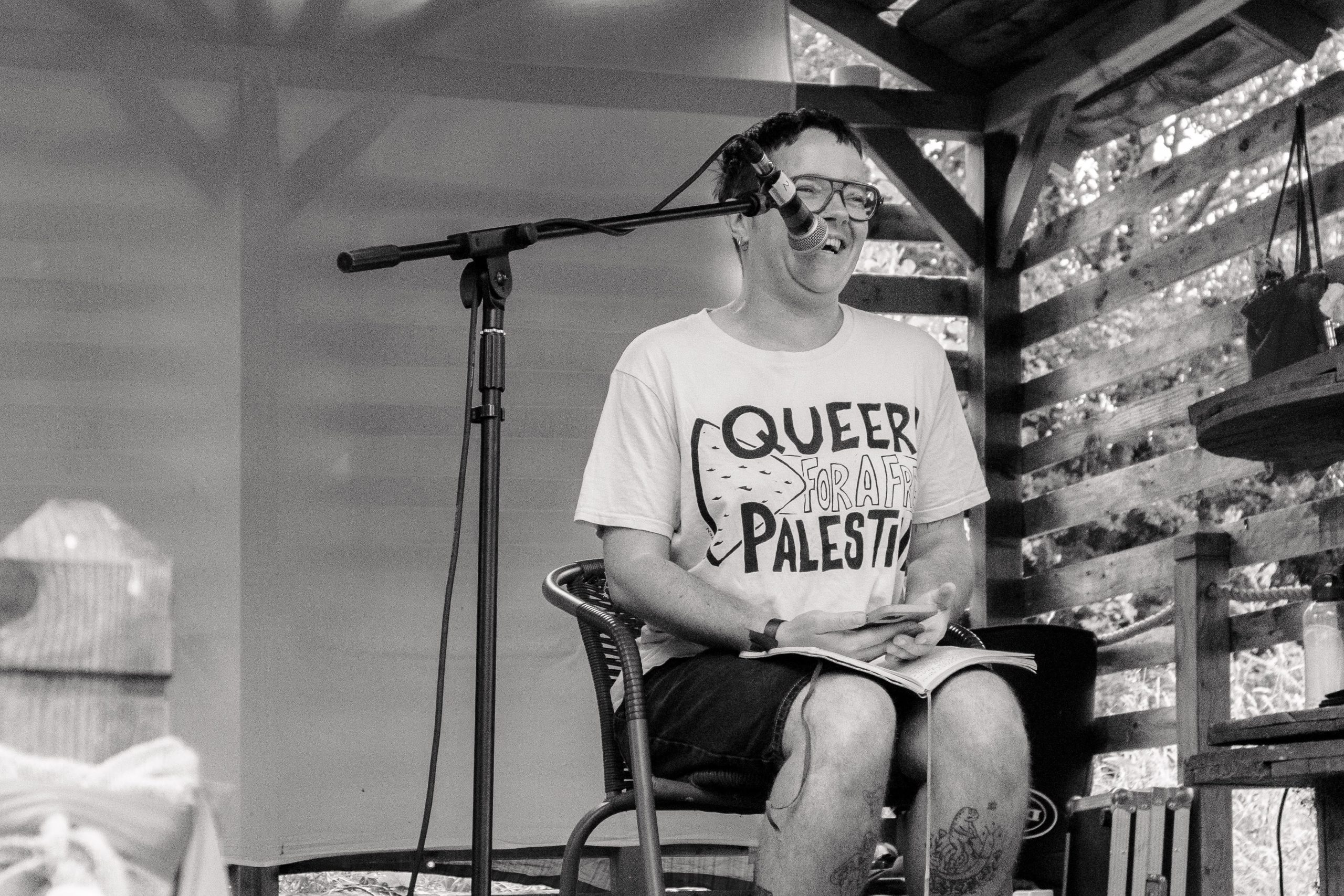
About Lou
Lou Thomas is a queer, trans, disabled and neurodivergent yoga teacher, massage therapist, and director of a non-profit wellbeing venue called Gather. Their work helps people connect with their bodies, themselves and their communities. Their work sits the intersection between well-being and social justice, and centres LGBTQIA+ community building and accessibility. They offer integrative massages and run accessible, therapeutic, and playful yoga classes and workshops around Brighton to help people explore, find centre and feel a little more at home and connected in our bodies and the world.
Lou has a background working in advocacy, wellbeing and training at various charities. He studied sexual dissidence masters at The University of Sussex, where his research focused on sexuality, gender, embodiment, disability, and mental health-madness in a digital world. He has trained in Hatha and Restorative yoga, as well as with The Yoga Nidra Network, Therapeutic Yoga and The Accessible Yoga School, the latter for whom he is an ambassador and continuing education student. He has trained in deep tissue, integrative, and advanced clinical massage therapy with Jing Advance Massage Training, table Shiatsu with The European Shiatsu School, and is delighted be to undertaking on a 9 month long Therapeutic Thai Massage Mudita training in 2027 with friend and colleague Leo Taylor.
All Lou’s work is trauma informed, and anti-oppressive and intersectional in approach, as they help us navigate the shifting, complex and essential relationship we have with our multilayered selves, community, and the natural world. They believe and have experiences how these traditions offer a sense of connection and wholeness within the porousness of who and what we are. Lou’s work centres accessibility, and they thoughtfully emphasise consent and autonomy, not punishment or performance. They have extensive experience in working with people with a range of neuro-types, physical, mental, and learning disabilities, and health conditions, at all stages and transitions of life.
They have a deep love and respect for the practice and roots of yoga, and always intend to share the practice within it’s historic and current context. They commit to engaging in a continuous process of study and reflection as a white practitioner, acknowledging the colonial erasure of yoga’s history and commodification and appropriation within white supremacist capitalism, as well as the lack of access for the global majority and those for whom yoga is an ancestral practice within the industry. At the heart of Lou’s work, is a deep desire for and effort towards freedom and liberation for all people and the planet.